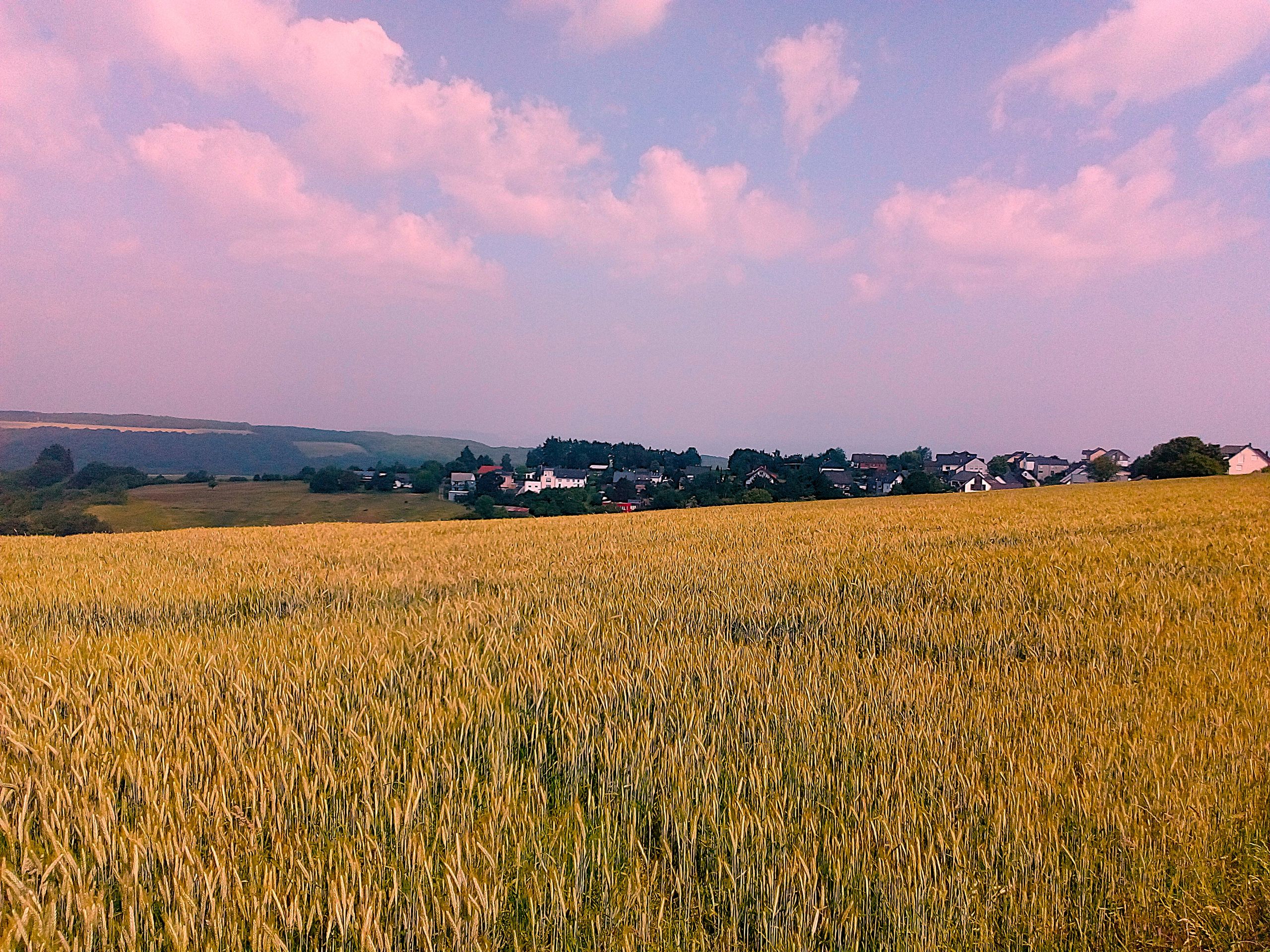
Copyright: Deutsch-Luxemburgische Tourist-Info
Franzenheim & Hockweiler
Franzenheim:
The
earliest traces of settlement date back to the Roman period. Franzenheim was first mentioned in a document in 1098 under the name “Brumtesma.” During an unauthorized excavation in 1903, the remains of a Roman villa were discovered.
Four portico columns made of white sandstone, as well as copper coins from the 2nd and 4th centuries, were recovered. They are on display at the Rheinisches Landesmuseum in Trier. Further excavations suggest that a Roman villa rustica (farmstead) was located in the village center.
In the Middle Ages, Franzenheim was consistently one of the smallest and poorest villages in the area. The iron mining industry in the 19th century—two mining tunnels are still preserved today—and the extraction of tannin for tanneries brought a certain degree of prosperity. The characteristic dwarf oaks still characterize the Franzenheim-Kernscheid Valley today.
Hockweiler:
In 975, Bishop Mangerich transferred the villages of Hockweiler, Irsch, and Korlingen to St. Martin’s Abbey. However, finds from the 4th and 5th centuries suggest that settlement took place much earlier. Due to a plague epidemic, Hockweiler was abandoned for an extended period during the Middle Ages.
The Marienkapelle, a listed historic monument, is well worth a visit. Built in 1885 against the will of the church authorities, it could not be consecrated until 1916, following many years of disputes with the diocese.
Ore mining in the 19th century brought a short-term improvement in economic conditions, providing a livelihood for up to 300 miners from the entire surrounding area.